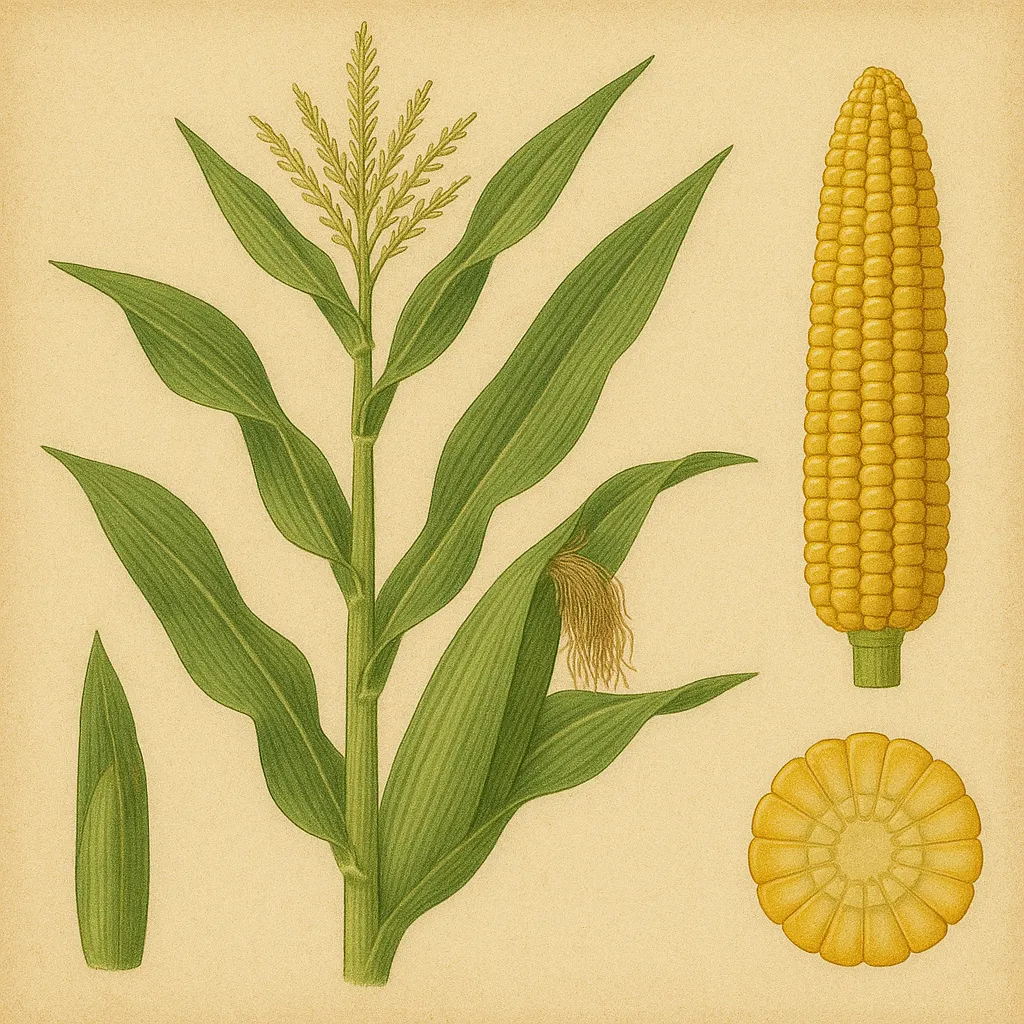
General
Sweet corn is a warm-season annual grown for its sweet, milky kernels eaten at the milk stage. It is frost-tender and needs a reliably warm summer to mature. Early, extra-early, and sugar-enhanced (sh2, se) varieties differ in time to maturity and sweetness; in cooler regions choose early cultivars. For good pollination and full cobs, grow in square or rectangular blocks of at least 12–16 plants rather than a single long row. Protect young plants from cold winds and birds. Soil should be fertile, moisture-retentive, and warm before sowing or transplanting.
Light
Full sun (at least 6–8 hours of direct light daily). Warm, sheltered site is best.
Soil type
Moist but well-drained, fertile loam with high organic matter. Warms quickly in spring. Avoid waterlogging.
Water requirement
Consistent moisture, especially from tasseling to harvest. Aim for 25–40 mm per week; more in sandy soils.
Nutrient requirement
High feeder, especially nitrogen and potassium. Benefit from compost and side-dressing during rapid growth.
Precultivation
In cool climates, precultivate 3–4 weeks before last frost. Sow one seed per cell or small pot (3–4 cm deep) in a warm place (18–24°C). Provide strong light and avoid root disturbance; corn dislikes check in growth. Harden off 7–10 days before planting out. To stagger harvests, sow small batches every 10–14 days until mid-June.
Planting
Plant out after frost when nights are mild and soil is warm. Space 25–30 cm between plants in rows 60–75 cm apart, arranged in blocks. Set transplants at the same depth as in pots. Mulch to conserve moisture and maintain warm, even soil. For direct sowing outdoors, sow 3–4 cm deep once soil is warm; thin to strongest seedlings. In short seasons, use cloches/fleece early, a reflective mulch, or a warm microclimate (south-facing wall).
Pruning
Pruning is not required. Side tillers (suckers) can be left; removing them rarely improves yield. Remove only damaged or diseased material.
Maintenance
Keep evenly moist from the 6-leaf stage through silking. Side-dress nitrogen at knee-high and again at early tassel/silk using compost, well-rotted manure, or organic feeds (e.g., nettle tea). Hoe shallowly to avoid root damage and suppress weeds; mulch to stabilize soil temperature. Support tall varieties in windy sites. For reliable pollination, gently shake stalks at midday during silking on calm days.
Harvest
Harvest when silks have browned and dried and kernels are plump and milky (about 18–24 days after silks emerge). Test by puncturing a kernel—milky sap indicates readiness. Pick in the cool of morning and cook or chill quickly; sugars convert to starch after harvest. For baby corn, harvest ears 2–4 days after silk emergence, before fertilization.
Common issues
Frost and cold soil stunt growth; wait for warmth. Birds pull seedlings; use fleece or netting until established. Slugs/snails damage young plants—use traps, hand-picking, or ferric phosphate pellets. Wireworms may attack in newly sodded ground—use cultivation and crop rotation. Corn smut (Ustilago maydis) causes swollen galls; remove and destroy affected tissue, rotate 3–4 years, avoid high nitrogen spikes and wounding. Poor kernel set is usually due to inadequate pollination, drought during silking, or too sparse plantings. Aphids can infest tassels; wash off with water or use soft soap.
Rotation schedule
Rotate on a 3–4 year cycle away from other grasses/cereals (e.g., wheat, barley, oats) to limit smut and soil pests. Follow legumes or green manures to supply nitrogen. Avoid planting after sod or pasture if wireworms are a known issue. After corn, follow with leafy greens or brassicas to use residual nitrogen.
Pollination
Wind-pollinated; plant in blocks rather than single rows for better kernel set.
Companion plants
Climbing beans, squash/pumpkin (Three Sisters), cucumbers, dill, marigold, nasturtium, basil. Low ground covers that keep soil moist.
Incompatible plants
Fennel, large sunflowers (competition/shading), and heavy-feeding brassicas closely adjacent. Avoid close rotation with cereals (grasses).